Advancing Fluid Flow and Heat Transfer Simulations through Innovative Techniques
Sliding Mesh and Dynamic Mesh for CFD Analysis
Computational Fluid Dynamics (CFD) is a crucial tool in engineering, allowing for the simulation and analysis of fluid flow and heat transfer. Within CFD, two important techniques for handling moving boundaries and rotating components are the Sliding Mesh and Dynamic Mesh methods. Understanding these techniques is essential for accurately modeling systems with moving parts, such as turbines, compressors, and internal combustion engines.
Sliding Mesh Technique
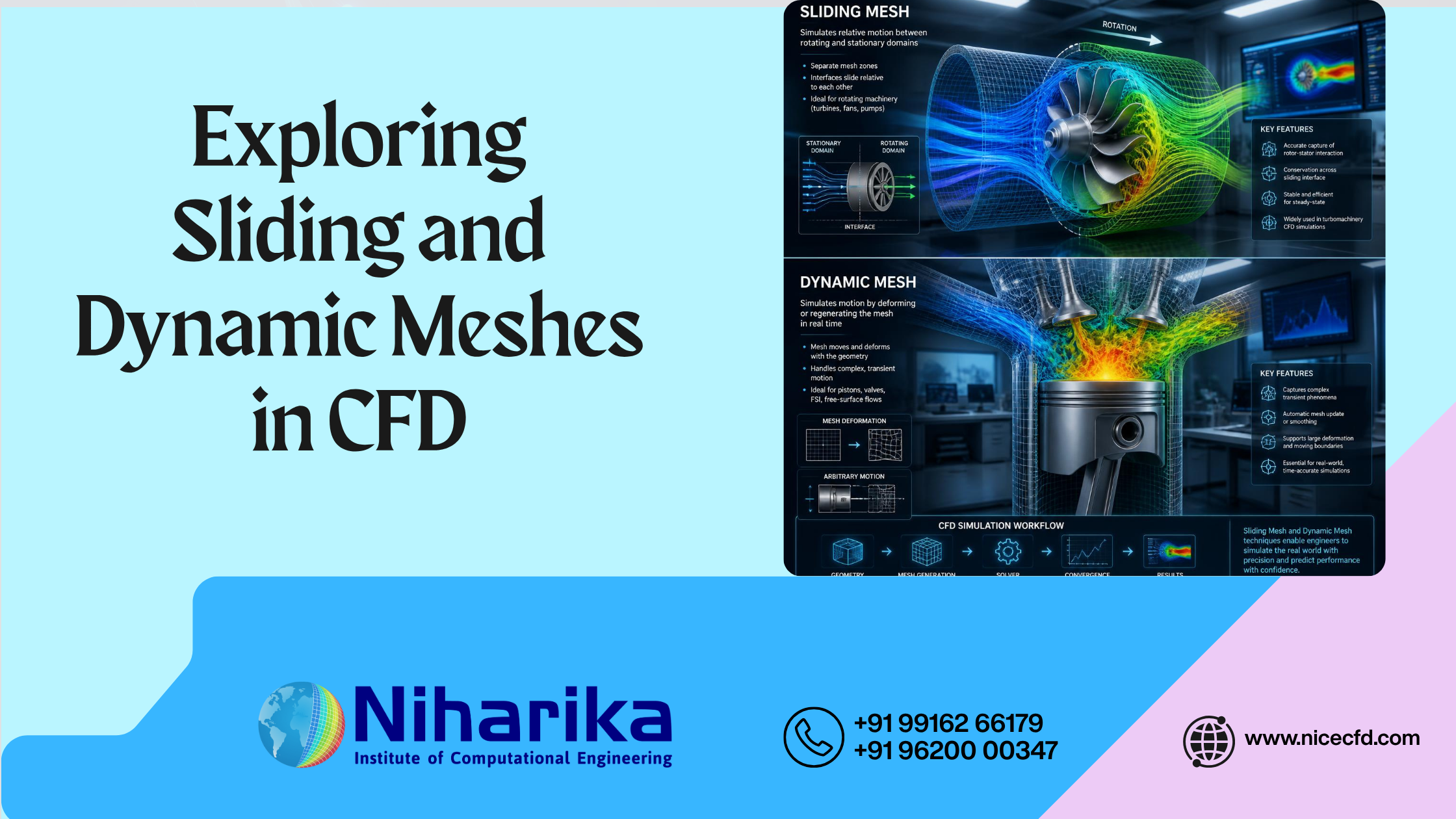
The Sliding Mesh technique is a method used within CFD to handle simulations involving rotating machinery. It is particularly effective for systems where a portion of the domain rotates relative to other stationary parts.
Key Features
Rotating Reference Frame: In the Sliding Mesh method, different parts of the computational domain are allowed to move relative to each other. Typically, this involves a rotating mesh zone surrounded by a stationary one.
Mesh Interfaces: The mesh interface between the rotating and stationary zones allows for the exchange of information, ensuring that the flow variables are accurately transferred across the boundary.
Transient Simulations: This technique inherently requires transient simulations, as the relative motion between mesh zones changes over time, influencing the flow field.
Applications
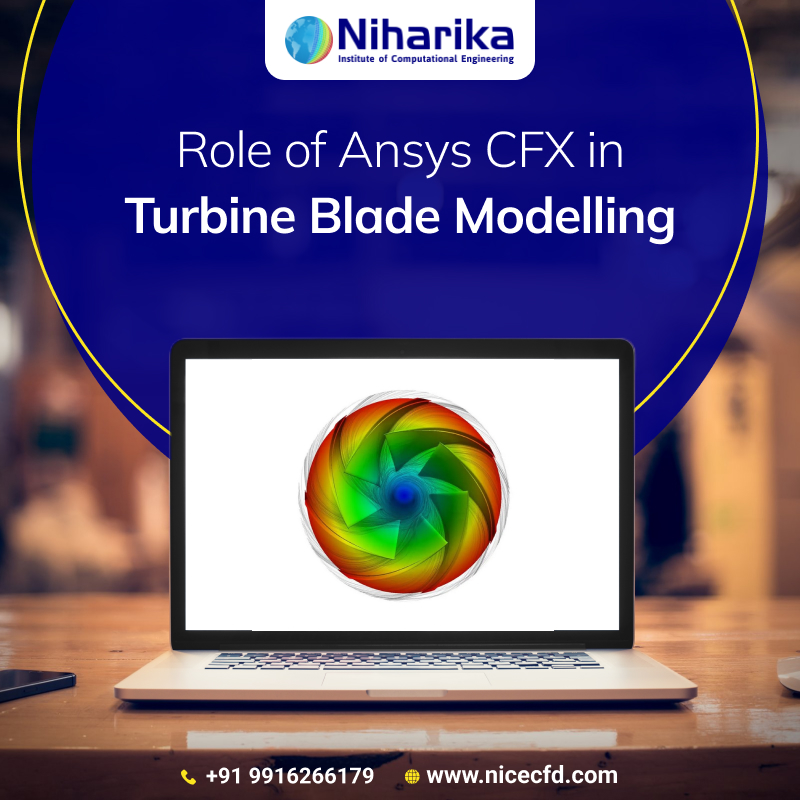
Turbomachinery: Ideal for simulating components like fans, pumps, and turbines where blades rotate around an axis.
Mixing Vessels: Useful in chemical engineering for analyzing mixing efficiency where impellers rotate.
Dynamic Mesh Technique
The Dynamic Mesh method is more versatile and can accommodate complex motions beyond simple rotation. It is suited for problems where the geometry changes over time.
Key Features
Mesh Deformation: The mesh can deform or move to accommodate boundary movements, such as piston motions, valve operations, or deformable bodies.
Mesh Update Algorithms: Techniques such as remeshing, smoothing, and layering are used to manage mesh quality and ensure accurate results as the mesh adapts to new configurations.
Transient and Steady-State Simulations: While often used for transient simulations, dynamic mesh can also be applied in certain steady-state scenarios.
Applications
Internal Combustion Engines: Simulating piston and valve movements within an engine cylinder.
Aerodynamics: Modeling the motion of flaps, slats, or landing gears in aircraft.
Biomechanics: Analyzing blood flow in deformable arteries or around moving components in medical devices.
Comparison and Considerations
When choosing between the Sliding Mesh and Dynamic Mesh methods, several factors should be considered:
Complexity of Motion: Sliding Mesh is ideal for simple, predictable rotations, while Dynamic Mesh handles complex, arbitrary movements.
Computational Cost: Dynamic Mesh can be more computationally intensive due to mesh updates, while Sliding Mesh typically involves less computational overhead.
Accuracy Requirements: The choice may depend on the accuracy needed for transient effects and the specific details of the flow field.
In conclusion, both Sliding Mesh and Dynamic Mesh techniques are powerful tools in CFD analysis, each offering unique advantages for simulating moving boundaries and rotating components. Selecting the appropriate method depends on the specific application, the nature of the motion involved, and the computational resources available. Understanding these techniques enables engineers and scientists to create more accurate and efficient models, ultimately leading to better designs and innovations.