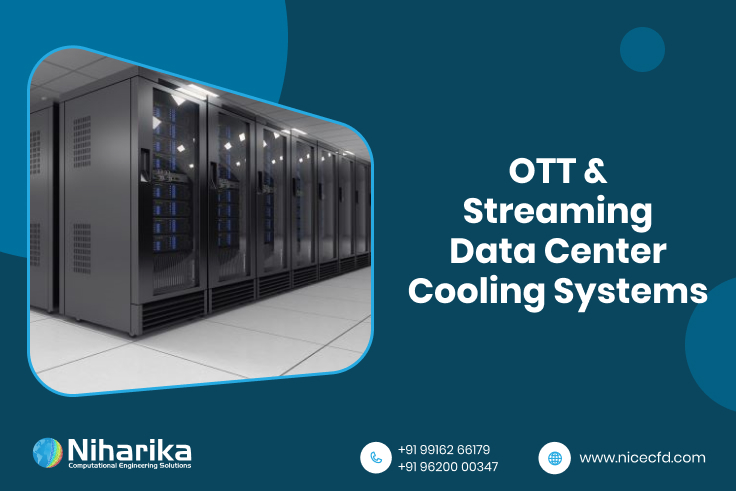
Many people assume OTT & streaming providers own giant data centers around the world. They picture racks and racks of servers under one roof. That is a neat image — but it is largely a myth.
In truth, most streaming platforms depend heavily on cloud data service providers and a distributed content delivery network. Their architecture spreads servers across networks, ISPs, and edge locations. This keeps latency low, cost manageable, and cooling challenges distributed.
If you take a computational fluid dynamics course, you will often study airflow and cooling in a single data center. But real systems like those used by streaming providers deal with dispersed cooling, edge nodes, and varying constraints. Understanding how they keep their servers cool offers live examples to learn CFD and FEA analysis for students and simulation engineers who want exposure to real‐world thermal systems.
The Actual Infrastructure Model of OTT
OTT & streaming providers do not just host everything in one place. Instead, they mix cloud infrastructure with on‑site hardware at ISP networks. This hybrid model shifts many responsibilities to partners.
Cloud Data Services
For core control systems — user accounts, recommendation engines, analytics — most providers rely on scalable cloud backbones. Core services run on hyperscale cloud platforms that use micro services, auto scaling clusters, and managed services. Cooling in these cases is handled by the cloud provider, meaning OTT platforms inherit robust thermal management strategies built by hyperscalers.
Edge Appliances
To deliver streaming content efficiently, hardware nodes (appliances) are shipped to ISP facilities. Each appliance holds large storage (hundreds of terabytes) and acts as a cache for popular content. This way, a lot of streaming traffic stays close to the user.
These appliances are often offered free of cost to suitable ISPs, provided they meet deployment criteria (rack space, power, connectivity). In return, OTT providers get a distributed infrastructure without building their own data centers everywhere.
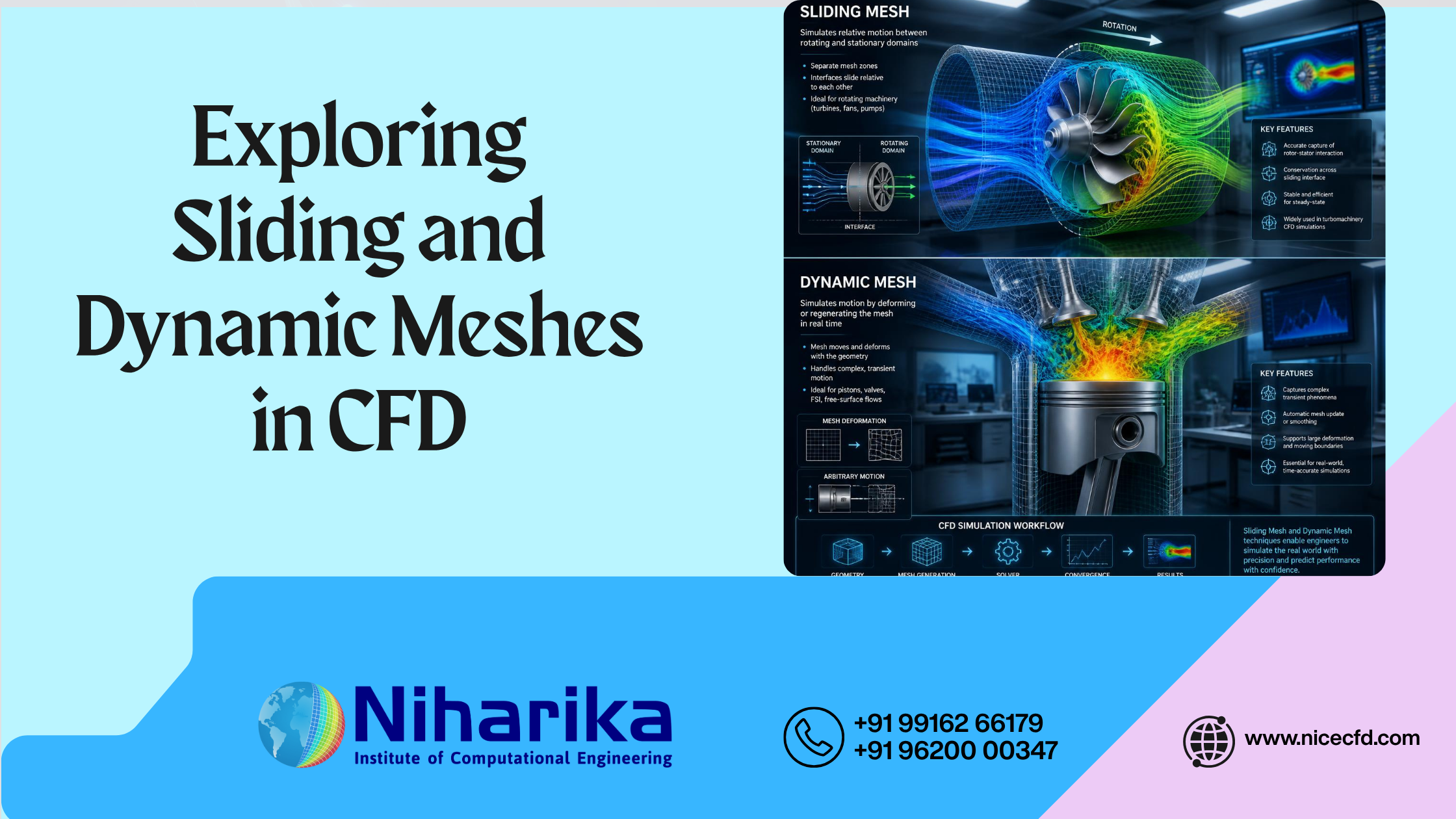
Discover career opportunities for CFD students.
The Cooling Reality: Distributed Responsibility
Because OTT infrastructure is hybrid and distributed, the duty of cooling is shared. Some parts are handled by cloud providers, others depend on ISPs. The complexity lies in heterogeneity.
Cloud Data Center Cooling
When OTT workloads run on hyperscale cloud data centers, the providers build and maintain the HVAC, power distribution, cooling loops and environmental control. Modern systems increasingly use a mix of air cooling and direct-to-chip liquid cooling, ensuring efficiency and reliability.
ISP‑Hosted Appliance Cooling Challenges
When appliances live in ISP server rooms or data closets, streaming provider controls over cooling is limited. Conditions vary by location – some ISPs have robust A/C and proper layouts, while others rely on minimal setups.
This variability forces careful thermal design in appliance hardware. Appliances carry dense storage, processing, and network interface gear. Cooling must therefore be precise — too much or too little airflow could degrade performance or reduce lifetime.
CFD Applications in Distributed Models
This kind of distributed and varied cooling environment is a rich playground for engineers who learn CFD And FEA analysis. Simulations help optimize cooling, validate designs, and adapt to diverse sites.
ISP Integration Challenges
• When deploying OCAs to a given ISP, streaming providers need to ensure the local room can cope thermally. This means assessing airflow, temperature gradients, intake and exhaust paths.
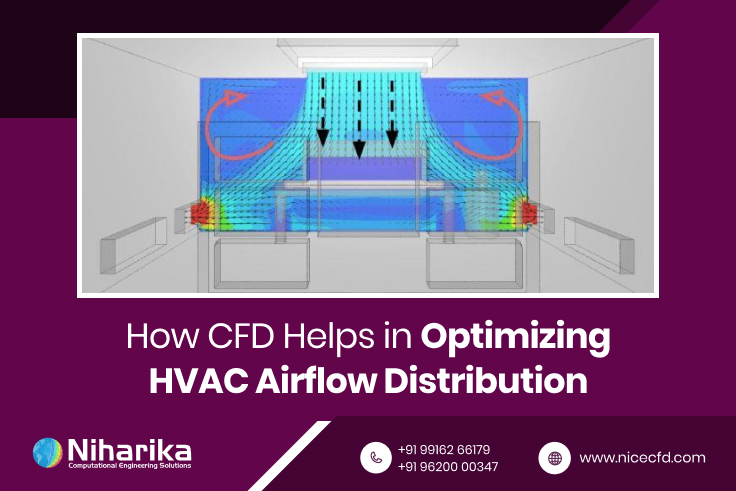
• Using CFD, engineers can model how air enters the rack, passes over drives, CPUs, and electronics, and then exits. They check for recirculation, hot spots, and pressure drop. These simulations predict whether the existing ventilation and fan designs suffice.
• Adding an OCA to an existing room may disturb airflow for other gear. CFD lets one simulate the room as a whole — how new exhaust merges with existing flows, where stagnation zones appear, or where flow interference can occur.
• Within each rack, one can optimize fan speed, baffle design, perforated panels, or ducting. CFD helps choose between forced-air cooling, ducted returns, or local exhausts to balance performance and acoustic/noise constraints.
OCA Design Considerations
OCA hardware must adapt to variations in ISP infrastructure. Designers must minimize thermal stress and make acceptance easier.
• Engineers use CFD from the very start. They model the interior of the appliance – airflow paths, heat sources, conduction through chassis, cooling fan placement, and boundary conditions. This ensures the OCA remains thermally safe in variable environments.
• OCAs have to work in less-than-ideal rooms. Designers aim to reduce thermal output density, use efficient components, and design airflow so that rejection integrates with existing cooling rather than replacing it. This makes uptake by ISPs simpler.
• Where possible, passive methods (heat sinks, conduction, ambient airflow) reduce dependence on fans and noise. But often, active cooling is necessary. CFD helps compare hybrid approaches — for example, using low‑speed fans plus ducting versus more aggressive fan designs, depending on the site.
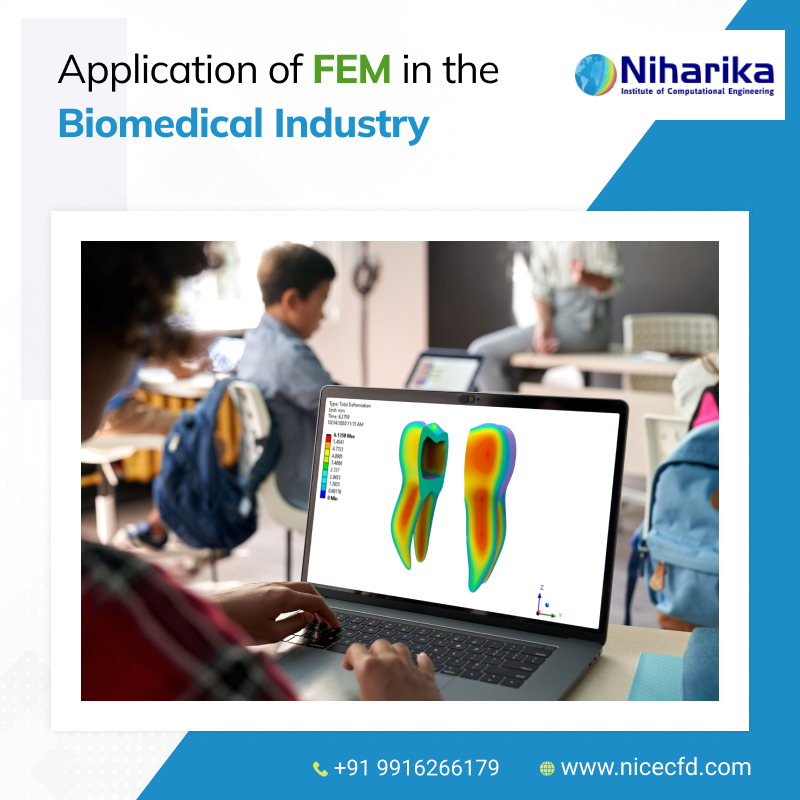
Understand the application of FEA in the Biomedical Industry.
Why This Matters for CFD Engineers
For those in CFD, distributed OTT cooling illustrates real complexity: overlaying simulation on uncertain physical environments, and tailoring designs to hybrid infrastructures.
• Understanding distributed vs centralized cooling
Most CFD training focuses on a single datacenter hall. But recent OTT platforms show cooling is not centralized but spread across ISPs and cloud. This means simulation must adapt to many boundary conditions, constraints, and uncertainties.
• Real‑world applications in edge computing
OCAs are an example of edge computing: hardware pushed close to users. Edge nodes bring cooling challenges (limited space, mixed environments) that are not typical in classical data centers. CFD engineers can use these scenarios in their work to simulate edge cooling reliably.
• Thermal analysis for third‑party infrastructure integration
When your simulation deals with hardware placed in third‑party sites (ISP rooms, telecom closets), you must consider unknown air paths, interference from other gear, structural constraints, and varying ambient conditions. This hones skills beyond “textbook” cases. And when you learn CFD And FEA analysis in such settings, your training becomes far more practical.
The Future of Distributed Cooling
As content delivery shifts more to the edge, cooling must evolve too. The future demands smarter, adaptive, and cooperative thermal solutions.
• Edge computing thermal challenges - Edge nodes may face harsh environments: poor ventilation, dust, heat from neighboring equipment, or limited power. Cooling strategies must be compact, robust, and resilient.
• Predictive cooling models - Using sensors and machine learning combined with CFD, systems could predict thermal behavior and adapt fan speeds or workload placement proactively. This helps prevent overheating before it happens.
• Collaborative infrastructure management - Because cooling responsibilities are shared (cloud provider, ISP, hardware vendor), future models might involve feedback loops among parties. For example, the cloud backend could modulate load if a remote OCA node nears thermal limits — a cooperative approach that simulation-driven design can enable.
In essence, OTT & streaming providers do not run monolithic data centers. Instead, they blend core services on AWS with distributed caching via Open Connect Appliances (OCA) placed at ISPs. Cooling responsibility is also split between cloud data centers, while ISPs must support edge appliances.
For engineers and learners, this is a strong real-world use case when you learn CFD And FEA analysis. You can model small nodes, test across variation, and build simulation experience in more messy, realistic settings.
If you want to apply simulation to edge systems or distributed cooling, begin with a computational fluid dynamics course at NICE CFD. Our training helps you model, analyze, and optimize complex thermal systems — from rack to room to network edge.
Join us to build real skills in CFD and FEA analysis applied to modern infrastructure.