Bridging the gap between two powerful fields
Introduction to AI and FEA
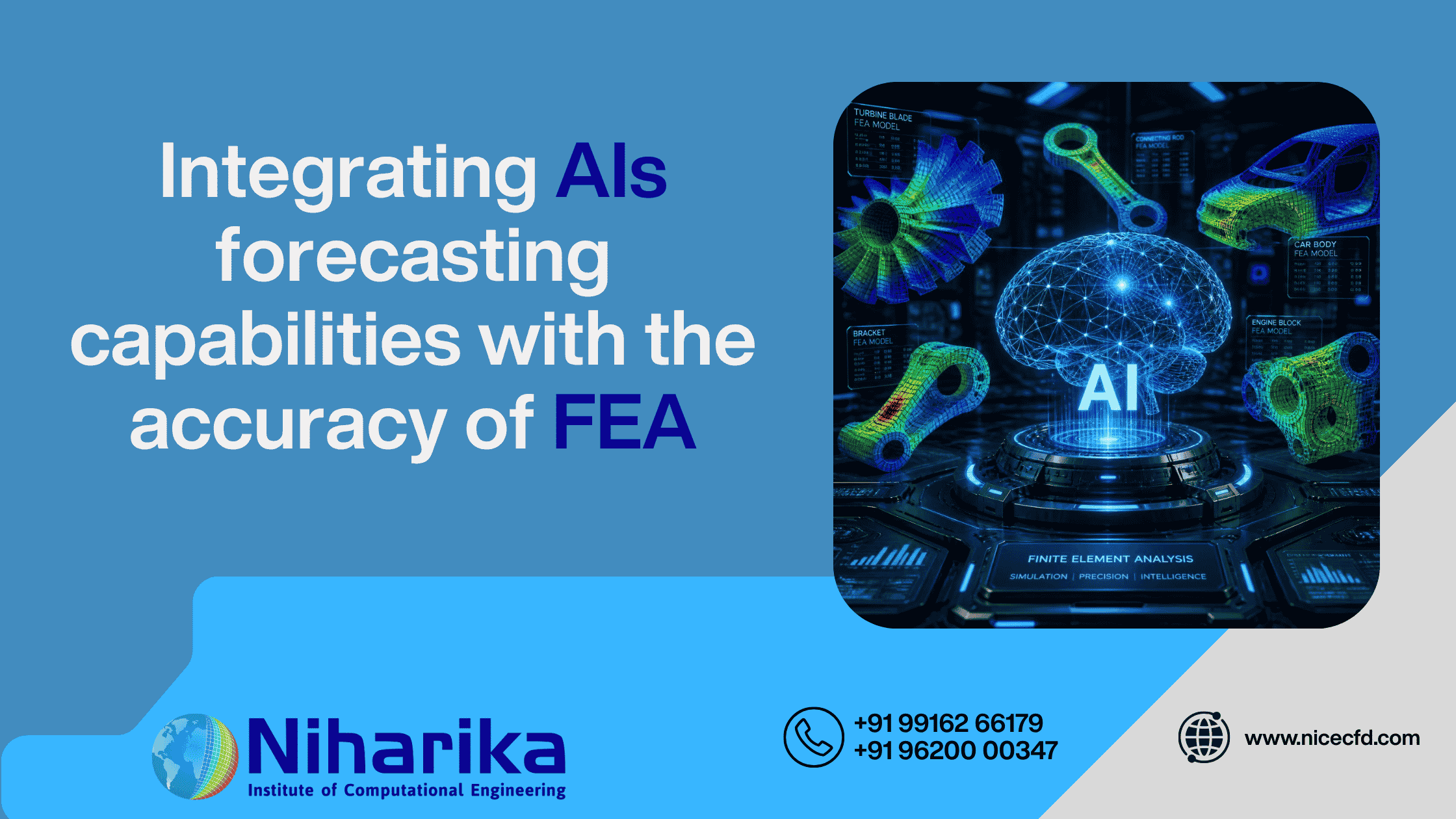
Artificial Intelligence (AI) and Finite Element Analysis (FEA) are two powerful disciplines that, when combined, offer groundbreaking solutions across various engineering and scientific fields. FEA is a computational method used to predict how a product reacts to real-world forces, vibration, heat, fluid flow, and other physical effects. AI, on the other hand, encompasses the development of computer systems that can perform tasks typically requiring human intelligence, such as learning, problem-solving, and decision-making.
The integration of AI with FEA is revolutionizing how engineers approach design, simulation, and optimization. AI can enhance FEA processes by automating complex tasks, improving accuracy, and accelerating simulation times. This synergy allows for more efficient and innovative product development.
How AI Enhances FEA
Automated Meshing:
1. AI algorithms can learn from previous meshing strategies to automatically generate high-quality meshes, significantly reducing the manual effort and time required.
2. Predictive meshing can anticipate areas requiring finer mesh density based on geometric features and expected stress concentrations.
Reduced Simulation Time:
1. AI models, trained on large datasets of FEA simulations, can predict outcomes with remarkable speed, often bypassing lengthy traditional simulations for preliminary analysis.
2. Surrogate models powered by AI can provide real-time feedback during the design process.
3. Optimization of FEA parameters: AI can intelligently adjust solver settings and analysis parameters to achieve faster convergence and more accurate results.
4. Design Space Exploration: AI can efficiently explore vast design spaces to identify optimal parameters and configurations.
Applications of AI in FEA
The synergistic application of AI and FEA spans numerous industries:
Automotive: Optimizing vehicle structures for crashworthiness, reducing weight while maintaining strength, and improving aerodynamic performance.
Aerospace: Designing lighter and more robust aircraft components, predicting material fatigue, and analyzing complex aerodynamic loads.
Biomedical Engineering: Simulating biomechanical behavior of tissues and implants, designing prosthetics, and analyzing drug delivery systems.
Manufacturing: Predicting manufacturing defects, optimizing process parameters for injection molding or stamping, and simulating material behavior under various production conditions.
Consumer Electronics: Ensuring structural integrity of devices, thermal management, and vibration analysis for enhanced durability.
Energy: Designing more efficient wind turbines, optimizing oil and gas exploration equipment, and simulating the performance of renewable energy systems.
Challenges and Future Outlook
Despite the immense potential, challenges remain. These include the need for large, high-quality datasets for training AI models, ensuring the interpretability and trustworthiness of AI-driven predictions, and the computational resources required for advanced AI-FEA integrations.
The future, however, is bright. As AI capabilities advance and computational power increases, we can expect even more sophisticated integrations. This will lead to fully autonomous design and optimization loops, predictive maintenance based on real-time simulation data, and the ability to tackle previously intractable engineering problems. The combined power of AI and FEA promises to unlock new levels of innovation and efficiency in engineering.